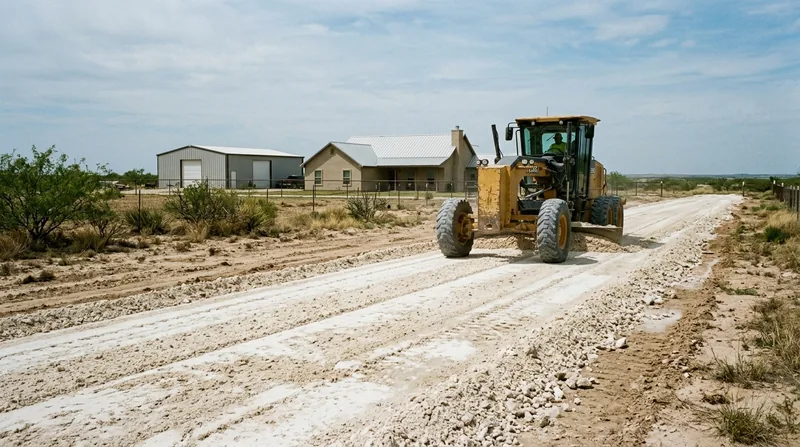




Gravel drives dominate the rural and ranch properties across the Permian Basin, and they fail predictably in West Texas heat and weather. Caliche flats near Stanton, Andrews, and Garden City, acreage lots in Odessa and Gardendale, and the long ranch approaches to oilfield leases all rely on gravel lanes that wash out in summer cloudbursts, rut under loaded water trucks and frac sand haulers, and turn to dust in the relentless wind. Gravel Driveway Installation & Grading in Midland starts with the ground itself. The sandy loam over hard caliche caprock that underlies Greater Midland is a superb base when it is compacted right and crowned for drainage, but it is a rutted mess when water sits or traffic pounds an unprepared surface. We build gravel drives in proper lifts of caliche and crushed flex base over fabric, crown them to shed summer cloudbursts, and establish the foundation that will hold a future asphalt paving job the day you decide to upgrade. Good grading is also the first step of every future paving job, and we build the base once and correctly over this caliche ground.
Why Gravel Driveway Installation and Proper Grading Matter in Midland and West Texas Ranch Country
The Permian Basin landscape is unforgiving. Summer temperatures above 100 degrees, relentless sun, wind that drives sand across every surface, and rare but violent thunderstorms that dump inches of rain on ground that cannot absorb it all conspire to destroy an ungraded or poorly compacted gravel drive within a single season. Water pooling on a flat or low-crowned drive creates ruts that trap more water, and loaded trucks grinding the same path day after day turn a marginal lane into a washboard or a pothole field. A properly graded and compacted gravel driveway sheds water, handles the weight of ranch equipment and oilfield service vehicles, and lasts years instead of months.
- Crowned gravel surfaces shed summer cloudbursts and prevent pooling that creates ruts and washboard.
- Proper compaction in lifts of caliche and flex base creates a stable foundation that resists rutting under loaded trucks and trailers.
- Fabric underlayment prevents caliche and gravel from mixing with the sandy loam below and keeps the base intact through freeze-thaw cycles.
- Correct grading establishes the base for a future asphalt paving job, so you build it right the first time.
A well-graded gravel drive is the most cost-effective surface for ranch properties, equipment yards, and long private lanes across the Basin, and it is the honest foundation for any future paving upgrade.
Key info: Ranch properties in Stanton, Andrews, and Garden City often have long caliche drives that were graded years ago and have settled or eroded. Regrading and adding a fresh lift of compacted flex base restores drainage and extends life for five to seven years before asphalt becomes the next logical step.
For permit and regulatory guidance specific to your property, verify with the City of Midland Planning and Development Services or your county road department if the drive crosses county right-of-way.
How We Install and Grade Gravel Driveways in Midland: Step-by-Step Process
Every gravel drive we build starts with understanding the ground and the drainage pattern. We assess the existing caliche base, identify low spots and drainage flow, and plan the crown and slope that will shed water toward the sides or a culvert. We then remove old ruts or failed material, proof-roll the caliche to confirm it is compacted, and add lifts of new material in the right sequence. The result is a drive that sheds water, handles traffic, and is ready for asphalt paving whenever you choose to upgrade.
- Assess the existing ground, caliche condition, and drainage flow across the property.
- Remove failed gravel, ruts, and standing water areas that indicate poor drainage or compaction.
- Proof-roll the caliche base and add compacted lifts of crushed flex base to establish proper elevation and crown.
- Install geotextile fabric between the caliche and the top gravel lift to prevent mixing and maintain structure through wet cycles.
- Crown the finished surface to shed water, compact the top lift, and grade the shoulders to direct runoff.
- Verify the drive handles traffic and sheds water before the job is complete.
The entire process is designed to work with the Midland caliche base, not against it, and to create a surface that will serve for years or transition cleanly to asphalt driveway paving when the time comes.
Example: A property in Midland near the Wadley-Barron Park area with a 1950s brick ranch and a 200-foot gravel drive that had settled into a washboard pattern. We regraded the entire drive, added 4 inches of compacted flex base over the existing caliche, installed fabric, and finished with a 2-inch lift of new caliche. The crown now sheds water, and the drive is stable for another five to seven years of service.
Gravel Driveway Installation Methods and When to Use Each
| Approach | Description | Best for |
|---|---|---|
| New Gravel Drive | Caliche base preparation, compacted flex base lifts, geotextile fabric, crowned finish with proper drainage. | New construction, property access roads, ranch and oilfield lanes where no drive exists. |
| Regrading and Lift | Remove ruts and failed material, recompact existing caliche, add fresh lift of flex base and gravel, restore crown and drainage. | Existing gravel drives that have settled, rutted, or lost crown due to age or heavy traffic. |
| Pothole and Rut Repair | Fill and compact localized ruts and washout areas, restore crown, extend life of the drive. | Drives with isolated damage from summer runoff or heavy equipment, where full regrading is not yet justified. |
| Gravel-to-Asphalt Prep | Grade and compact the gravel base to specification, establish proper crown and drainage for asphalt overlay or new paving. | Property owners planning to upgrade from gravel to asphalt within one to two years. |
Gravel Driveway Installation and Grading Cost in Midland: What to Expect
Gravel driveway installation and grading pricing depends on the size of the drive, the condition of the existing caliche base, the amount of material needed, and the complexity of the drainage work. A straightforward regrading job on an existing 150-foot ranch drive with settled gravel and poor crown might start around $950 to $1,200, while a full new drive installation on prepared ground can run higher based on length, width, and material volume. The most important factor is getting a written estimate on site that includes the drive dimensions, the depth and type of material going down, and the tonnage of caliche and flex base required. See our full pricing overview for more detail on how we quote gravel work and what drives the cost up or down.
We always provide written estimates with tonnage specifications, so you know exactly what material is going into your drive and what the total cost will be before we start. Many homeowners and ranch managers are surprised to learn that a proper gravel base is cheaper than they expected, and that investing in correct grading now means a smoother transition to asphalt paving later. Get a free estimate by calling us at (432) 289-5378 or visiting our contact page. We respond within 24 hours with no obligation to book.
Gravel Driveway Installation and Grading Near Me: What Midland Homeowners Should Know Before Hiring
Hiring a contractor for gravel work requires the same care as hiring for asphalt paving. Start by asking for references from recent gravel or ranch property work, and verify that the contractor carries liability insurance. Request a written estimate that lists the drive length and width, the depth of each material layer (caliche, flex base, finish gravel), and the total tonnage being delivered. A contractor should be able to explain why the base matters and how crown and drainage will extend the life of the drive. If you have an HOA or if your property is in a master-planned community, check the architectural standards before you start, as some developments restrict gravel surfaces or require approval for major grading work. If your drive crosses county right-of-way or a culvert, verify with the City of Midland or your county road department whether a permit is required.
- Ask for references from gravel and ranch property work completed in the last two years.
- Request a written estimate with drive dimensions, material layers, and total tonnage.
- Verify that the contractor carries liability insurance and can provide a certificate on request.
- Check HOA rules and architectural standards if your property is in a deed-restricted community.
- Confirm whether a permit is needed by contacting your city or county road department.
- Get at least two estimates so you can compare approach, material quality, and price.
We have been in business since 2011 and serve Midland, Odessa, Stanton, Andrews, and the surrounding Basin counties. Call us at (432) 289-5378 to schedule a free, no-obligation estimate for your gravel drive or regrading project.
Gravel Driveway Installation & Grading in Midland: Pricing Guide
| Service | Price | Details |
|---|---|---|
| Regrading and single lift | Starting at $950 | Existing gravel drive with settled areas, ruts, or poor crown; includes recompaction and fresh caliche or flex base lift |
| Full new gravel drive installation | Starting at $1,400 | New construction or complete base build; includes caliche compaction, fabric, flex base lifts, and crowned finish gravel |
| Pothole and rut repairs | Starting at $400 | Localized washout or damage repair; fill, compact, and restore crown in affected areas only |
| Gravel-to-asphalt prep grading | Starting at $800 | Grade and compact existing or new gravel base to specification for future asphalt paving overlay or new installation |
| Travel and estimate | Included / Free | No mileage fee in Midland and surrounding service areas; free written estimate within 24 hours, no obligation to book |
Indicative pricing, the exact cost depends on square footage, finish, and site access. Free personalized estimate within 24h at (432) 289-5378.


