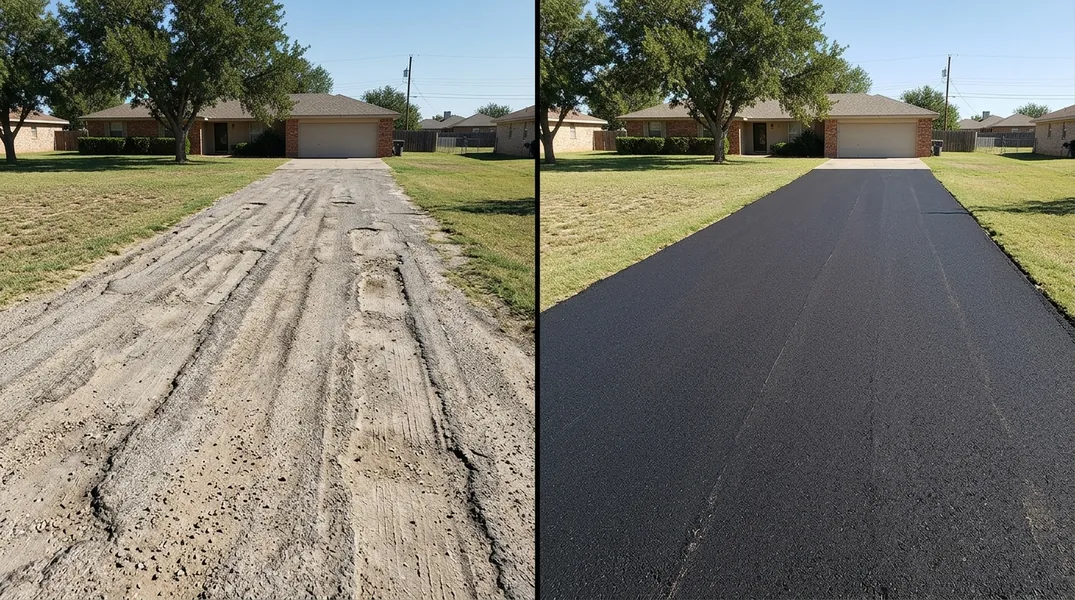
What Are Recycled Asphalt Millings?
Recycled asphalt millings, also called crushed asphalt or RAP (reclaimed asphalt pavement), are fragments of old asphalt that have been milled or crushed into smaller pieces. When asphalt pavements reach the end of their life or undergo Asphalt Resurfacing & Overlay projects, the removed material doesn't simply disappear into landfills. Instead, responsible contractors recycle it into these granular materials, which can be reused for new applications like driveway bases, parking areas, and road stabilization.
The appeal of asphalt millings for property owners across Midland and the surrounding Permian Basin region is straightforward: they're affordable, environmentally conscious, and surprisingly durable when properly installed. The millings contain residual binder (the sticky asphalt cement) that helps them bond together over time, especially when compacted and exposed to heat and traffic. This natural binding characteristic makes them an attractive alternative to gravel or crushed limestone for rural acreages and long driveways where full Asphalt Driveway Paving & Installation might feel like overkill.
Why Permian Basin Homeowners Choose Millings Driveways
Property owners managing acreages in Midland and surrounding areas face unique driveway challenges. Long ranch driveways, rural access roads, and seasonal maintenance needs make traditional paving prohibitively expensive for many. Recycled asphalt millings provide a practical middle ground between bare dirt and hot-mix asphalt. They compact naturally, shed water effectively, and create a stable, all-weather driving surface that stands up to the intense Texas sun and occasional heavy rain events common to the Permian Basin.
The environmental benefit also resonates with conscientious landowners. By choosing a millings driveway, you're diverting waste from landfills and supporting the circular economy in road construction. The material has already served one purpose and is being given a second life, reducing the demand for virgin aggregates and new asphalt production. For acreage owners who want a responsible, budget-conscious solution without compromising on functionality, asphalt millings hit the sweet spot.
Millings Driveway Cost in Midland: What to Budget
One of the biggest advantages of choosing a recycled asphalt driveway is the dramatic difference in pricing. A typical crushed asphalt millings driveway costs between $0.50 and $1.50 per square foot when professionally installed, depending on base preparation, thickness, and local material availability. Compare that to traditional hot-mix asphalt paving, which runs $2.00 to $4.00 per square foot or more, and the savings become immediately apparent. For a 1,000-square-foot driveway, millings could cost $500 to $1,500 installed, whereas conventional asphalt might run $2,000 to $4,000 or higher.
The exact cost depends on several factors specific to your property. If your site already has a compacted base or gravel layer, installation is faster and cheaper. If you're starting from bare earth, you'll need additional grading and base preparation, which increases the total investment. Thickness matters too; a thicker application (typically 2 to 3 inches) provides better longevity and durability, especially on high-traffic acreage driveways. Seasonal factors also play a role. Installing millings during warmer months when the residual binder is more pliable yields better compaction and bonding. To get an accurate estimate for your specific situation, reach out to Midland Asphalt Paving at (432) 289-5378 or request a free estimate today.
Installation and Maintenance of a Crushed Asphalt Driveway
Proper installation is critical to the longevity of an asphalt millings driveway. The process begins with site grading and compaction of the subgrade to ensure good drainage and a stable foundation. A layer of larger crushed stone or recycled asphalt base material (often called RAP base) is spread and compacted, creating a load-bearing layer that prevents the millings from sinking into soft soil. The recycled asphalt millings are then spread to the desired thickness (typically 2 to 3 inches) and compacted using a roller or compactor. This compaction is essential because it forces the particles together and activates the residual binder, which helps the millings bond and harden over time.
Maintenance of a millings driveway is simpler than many homeowners expect. Unlike traditional asphalt that may need seal coating and crack filling, a well-installed millings driveway mainly requires occasional raking to redistribute material and fill in worn spots. After the first year or two, the surface hardens considerably as the binder sets and traffic compacts it further. Light top-dressing with fresh millings every few years extends the life of the driveway. In rare cases where significant damage occurs, Pothole Repair & Asphalt Patching services can address localized problem areas without requiring a complete replacement. The low maintenance profile makes millings driveways especially attractive for busy acreage owners who want durability without constant upkeep.
Millings Driveway vs. Traditional Asphalt: A Fair Comparison
While recycled asphalt millings offer impressive cost savings, it's important to understand how they compare to full Asphalt Driveway Paving & Installation in terms of longevity and performance. A properly installed hot-mix asphalt driveway typically lasts 15 to 20 years with regular maintenance, while a well-maintained millings driveway typically lasts 5 to 10 years before needing significant re-topping. However, the lower upfront cost means you can re-apply millings multiple times for less than the cost of a single full asphalt paving job. For rural acreages and long driveways where appearance is less critical than function, this trade-off often makes financial sense.
Millings driveways also perform differently in extreme weather. During hot summers, they may soften slightly if subjected to intense sun without shade, though this rarely causes problems in normal use. In winter, they don't crack as readily as asphalt because they have more flexibility and can accommodate freeze-thaw cycles. Heavy, sustained rain can temporarily soften a millings surface, but proper grading ensures water sheds away quickly. For the Permian Basin climate, where summers are scorching and winters are mild, millings prove surprisingly resilient. If you're uncertain whether millings are right for your property, the team at Midland Asphalt Paving can assess your specific needs and recommend the best solution.
Is an Asphalt Millings Driveway Right for Your Midland Acreage?
Recycled asphalt millings work best for specific applications. If you own a rural acreage with a long driveway, operate a ranch or farm, or manage a property where the driveway sees moderate but not heavy commercial traffic, millings are an excellent choice. They're ideal for properties where aesthetics are less important than durability and cost-effectiveness. Conversely, if your driveway is the first impression of a high-end home, you're running a business with heavy vehicle traffic, or you live in a neighborhood with strict HOA standards, traditional asphalt paving may be the better investment.
The decision ultimately comes down to your priorities, budget, and long-term vision for your property. Millings offer unbeatable value for acreage owners in the Permian Basin who want a professional, all-weather driving surface without the premium price tag of conventional asphalt. To discuss your specific situation and determine whether a millings driveway makes sense for you, contact Midland Asphalt Paving at (432) 289-5378 or submit a free estimate request online. Our team has extensive experience with both traditional and recycled asphalt solutions and can guide you toward the choice that delivers the best value and performance for your property.
Looking for a professional asphalt paving contractor in Midland? Midland Asphalt Paving responds fast for all your asphalt paving needs.
Get a Free Quote